
• Home
  • About Us
  • Contact Us
Sarah-Godfrey_black_high-res
  • Self Help Sessions
  • Blog
Sarah-Godfrey_black_high-res
  • Home
  • About Us
  • Our Fees
  • Blog
  • Courses
  • FAQ
  • Contact Us

iStock_000020206934Small

By Belinda Bow  in Psychology Today

I have a really strong opinion when it comes to work/life balance, because balance is about equality.
Who wants their personal life to have equal value to your career? And who even has the energy to put equal parts into their personal life and career? When you put like that, it even sounds a little scary.
Harmony vs. Balance
So my take on life is more about achieving harmony than balance. For starters, the word harmony instantly sounds nicer and more peaceful, and it doesn’t conjure up images of tightropes and balance beams! But seriously, harmony is just that, it’s about giving your life, your self and your family more harmony.
Sometimes life will ebb more in one direction and flow back into another, sometimes more equally than others. This is why you need to choose your own path. Your life has to be your own version of priorities and harmony
I want to be 7 again
When we were young, we were encouraged to explore, to grow and to learn. Then suddenly as we get older, the responsibilities increase and we are told that we must balance (and do it all)!
Could you imagine going back to your seven year-old self and saying, “No darling, you must balance your work with your playtime”? Of course not. We encourage our kids to do what they need to with school and homework, and then get outside to play, laugh, leap and do whatever else they choose.
How can we do this as adults with responsibilities? Don’t put an expectation on yourself to get everything done right now. Instead, do two or three essential tasks each day. Then use the rest of the time to do the really important things. And by that I mean, spending time with your kids, taking time to just be, and pursuing hobbies that fill your emotional tank. You’ll never regret that time spent.
Make it happen
What you need to do right now to get your life in harmony:
1. Choose your own path and create your own life.
2. Make it clear for yourself what your path looks like. If you are not clear, how do you know it’s really what you want?
3. Set limits and boundaries, but know that it’s not perfect and that’s ok.
4. Have fun. Play with the kids. Get outside. Let go. Feel the sand between your toes.
The rules
As you choose your own path, consider three things:
1. Whatever you do and whatever you choose, do not compare. Don’t try and be someone you are not. You many think that someone else’s life is perfect, but remember that the grass is not always greener. Make choices about your path that are within your own values and desires. Remember that their circumstances may be different, they may have more time to do the things that you’ve always wanted to do, but you will find that they might have had to opt out of something else.
2. Your harmony should be ever changing. The harmony you have right now, might not work down the track. So adjusting and recalibrating your vision and your life is important to keep your more peaceful path. Just know that at times, you may find yourself more present for your family and less at work and vice versa – and that’s fine.
3. Don’t see yourself as wearing different hats for different worlds (e.g. work vs. home life or social life). Be your authentic self at work and outside of work. You can be the same person, you just happen to do different things.
The cool stuff
Rather than trying to achieve the gold medal of work/life balance, life will tell you that harmony is far more manageable and so much more realistic. By choosing your own path, you can also choose not to feel guilty if you skip a meeting (with your employer’s permission) and head to the school athletics carnival.
There is nothing like walking across the playground and hearing your daughter squeal as she runs to you in delight! And equally, you can choose to not feel guilty when you go away for work, go get a massage, do that online course or spend time with friends.
It’s time to choose harmony over balance. I’m in. How about you?

Filed Under: Uncategorized

Therapy

By Marisa Baschuk

If you are tired of washing and drying bed-sheets from constant wetting, you are not alone.

Bedwetting is common in young children. Most children become dry at night between the ages of 3 to 5. But, 20% of five year olds still wet the bed at night. Most of these children will stop wetting in early primary school, but 1% will continue into their teens.

Children do not wet the bed on purpose; it is not under their control. Getting angry or upset with them or offering rewards for dry nights will not help.

The best way to deal with bed-wetting in young children is to give lots of reassurance that bedwetting is normal and common and they will grow out of it. Talking about an adult in their life who was also a bed-wetter usually puts children at ease and not feeling so alone. Reading books can also help (Dippy’s sleepover by Jane Clarke, Sammy the Elephant and Mr Carmel by Joyce Mills or David’s Secret Soccer Goals by Caroline Devine).

Restricting sugary or caffeine-infused drinks can also help.

Bedwetting, known in medical terms as nocturnal enuresis, tends to run in families. The causes could be varied – it may be, simply, the brain has not learnt to make the connection between feeling of a full bladder and needing to void. It may be that the child has not yet started to produce the Antidiuretic Hormone (ADH). ADH concentrates the urine overnight so our bladders don’t become so full. Some believe that children who are deep sleepers simply don’t wake up to go to the toilet.

Urinary tract infections, constipation and other health conditions may also cause bed-wetting. Before starting any treatment, it is essential to have a health check to ensure there are no other medical reasons for the wetting.

Wearing night-nappies makes bedwetting more manageable for everyone, but may also extend the bedwetting as it takes away the discomfort of waking up in a cold, wet bed. Likewise, restricting fluids at night may reduce wetting, but fails to teach your child to deal with a full bladder (and could lead to dehydration).

Some children will have a period of dryness, and begin to wet the bed again at a later stage. Often, these episodes are triggered by a stressful event in their life such as parental separation, starting kindergarten or moving home. Most children will stop wetting again when the stress levels reduce.

Tips for dealing with wet sheets:

• Making the bed twice – mattress protector, sheet and again, mattress protector and sheet makes it easier to handle wet accidents at night, as the first layer can be peeled off and the bed is made – ready to go back to sleep.

• Use a Kylie bed-wetting sheet. These are 1×1 m absorbent sheets that sit on the bed over the child’s sheet.
Tips for encouraging dry nights

• Give your child lots of reassurance that it won’t last forever.

• For children over 6 years, do bed-checks for a week and work out about what time of night your child is wetting. If you find a regular pattern, you can then wake up your child half an hour earlier than the estimated time. Take your child to the toilet, but make sure your child is fully awake to void in the toilet.

• Have a reward system for remembering to go to the toilet before bed.

• Get older children to take ownership of their wetting by asking them to remove their wet sheets and take them to the laundry. Explain to your child that this is not a punishment, it is about taking responsibility for their issue.

From age six, many children become self-conscious about bed-wetting, particularly when doing sleep-overs or school camps. If your child starts to show signs of distress, seek professional help.

Doctors sometimes recommend a synthetic DHA medication to help children stay dry. This can be helpful short-term, such as when your child is going on school camp – but not recommended long-term as it does not teach your child how to stop the bedwetting. If you are going to try this, make sure you do so weeks before the event. It does not work for all children.

For children over 6 years of age, the most effective treatment is the Bell and Pad alarm. This consists of a mat with small electrodes, placed under the child on the bed. These electrodes are very sensitive to moisture, and set off a high-pitched alarm at the first urine drop. This wakes the child up immediately and teaches them to wake up and go to the toilet instead. Within 6 to 10 weeks of this treatment, 80% of children become dry. Some children will start to wet again within 6 months, but a quick response with another stint of the bell and pad tends to deal with this.

Where to get help

There are specialised clinics for enuresis in both the private and public sectors. Specialists can include Continence Nurses, Psychologists or Paediatricians. The first point of call is your GP.
Marisa Baschuk
Psychologist
Moving Mindsets
www.movingmindsets.com.au

Filed Under: Uncategorized

MOVINGMINDSETS WILL BE MOVING WHILE SOME RENOVATIONS ARE COMPLETED. OUR TEMPORARY ADDRESS IS 1106 NEPEAN HIGHWAY, HIGHETT. OUR PHONE NUMBER AND FAX REMAINS THE SAME.

Filed Under: Uncategorized

NB

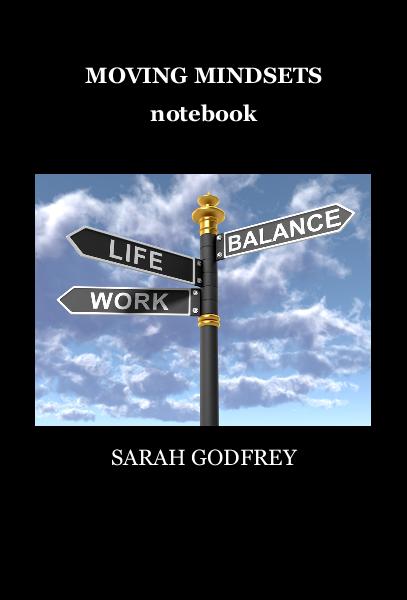
MOVINGMINDSETS NOTEBOOK FOR SALE $19.99

Sarah Godfrey has published a resource to use while in counselling to keep you focused and motivated. It has a CBT journal as well as reflective pages, tips on well being and decision making. This notebook is a handy resource for anyone in counselling to use in and out of sessions.

Filed Under: Uncategorized

We are excited to welcome Marisa Baschuk and Olivia Sack to our team. Both these psychologists have along professional history in their fields and will add more services and support for our clients. See more by Clicking on their names.

Filed Under: Uncategorized

Corporate

MovingMindsets is renovating! Watch this space to find out all the exciting news about the renovation.

Filed Under: Uncategorized

1. Big picture things. The year 12 exams are an assessment of 12 years of learning. Most of what you will
be assessed on you already know and have learnt. It’s stored away in your memory banks. You‘re not expected to cram 12 years of studying in one year. Trust that some of the information you’ve learnt
has stuck. Be organised and steady in your revision.

2. Average out your marks. That will give you a baseline entry score. Anything more than that is a challenge between you and yourself. No-one else. This isn’t a competition with your school friends. Any score above your baseline is a success. And a bonus! If you average around the 70 to 80 mark than be realistic. Don’t suddenly focus on achieving +98, you could do it but expect on a good day a score between 80 and 90. Remain realistic and optimistic.

3. Check where your baseline scores will get you in terms of work, university and TAFE’s. Remember you can enter into a course that may not be your preferred course and then move around from there. Of course you can always take time away from study and get a job returning as a mature age student if you want. Learning and achieving is an open age event. Keep a flexible, open mindset about the future and opportunities.

4. Your academic role is one of many things you will and can excel at. Draw a pie chart and fill it with all the things you enjoy and succeed at, no matter how small. Add your strengths as a person- humour, loyalty, determination etc. Remind yourself how many parts there are to being you. No one part is more important than another. Remember to stay balanced about who you are.

5. Your final year score is not a representation of who you are but an indicator of how well you can study and remember things and how well you function in academic settings. Do not get your sense of self and final score mixed up. One is an academic number that may or may not help you move forward into adulthood. The other is a unique, complex and wonderful human being that is capable of many other amazing achievements. Equally important as school and work are the relationships you have, the person you grow to be and the challenges that you accept in life.

Finally remember to RELAX. This is the last year of school for you. You’ve worked hard and sacrificed a lot. You’ve made it through childhood, survived adolescence and now are about to discover the wonderful world of adulthood. This is a year of celebration!
Take time to be with family and friends.

Take breaks in study to think about other things then just school work and exams.

Ask for help and support. Give help and support.

Don’t get caught up in the DRAMA of year 12 exams.

Stay grounded, optimistic and open to the experience not caught in the WHAT IF’s of what might happen.

Seek professional help if you’re anxiety and stress is overwhelming.

But most of all ENJOY YOURSELF. Make it a year that you’ll look back on remembering all the fun you have had, people you’ve met and experiences you enjoyed.

Filed Under: Uncategorized

Of course as psychologists and therapists we love to read and are continually researching and expanding our library of knowledge about maintaining a sense of well being.

To help you navigate the enormous plethora of self help books available we are listing some we like. If you have any that have been helpful in your recovery please feel free to email us the details and why it helped you.

THE LIST

The Girl’s Guide to Loving Yourself- A book about falling in love with the one person who matters most-YOU by Diane Mastromanino

Get Real! Beyond the Body Beautiful by Aisbett & Rieger

Change Your Thinking (2nd Ed)- positive and practical ways to overcome stress, negative emotions and self defeating behvaiour using CBT by Sarah Edelman

Stop Walking on Eggshells (2nd ED)- Taking your life back when someone you care about has borderline personality disorder by Mason & Kreger

Men of Honour- A Young Mans Guide to Exercise, Nutrition, Money, Drugs, Alcohol, Sex, Pornography and Masturbation by Glen A Gerreyn

My Anxious Mind- A teen’s guide to Managing Anxiety and Panic by Tompkins & Martinez

All is Well- Heal your body by Louise Hay & Mona Lisa Schulz

Life Without Ed- How one woman declared independence from her Easting Disorder by Jenni Schaefer & Thom Rutledge

It’s All Your Fault- 12 Tips for Managing People Who Blame Others for Everything by Bill Eddy

Beating Bipolar- How one therapist tackled his illness and how what he learned could help you by Blake Levine

You Don’t Really Know Me- Why mothers and daughters fight and how both can win by Terri Apter

What Every Parent Needs to Know by Margot Sunderland

The Five Love languages of teenagers by Gary Chapman- also The Five Love Languages (Couples) and The Five Love Languages (Singles).

Filed Under: Uncategorized

The clinic promotes the Psychology Week every year by displaying the APS promotion pack and distributing information to local GP’s/schools. It connects the clients and referral agents with the broader picture of the APS and psychology and the positive use of psychology. We encourage people to discuss psychology and treatment using therapy with us.

Follow on Twitter APS@apsmedia #NPW2013

Filed Under: Uncategorized

Monique brings 18 years of professional experience to the clinic and is an exciting addition to the services we offer. Her special interest is in perinatal and infant issues as well as working with adults, adolescents and relationships.

Filed Under: Uncategorized

  • « Previous Page
  • 1
  • 2
  • 3
  • 4
  • 5
  • Next Page »
Need to talk?

Articles

  • Foundations of Relationships 
  • What are relationships?
  • Understanding anxiety
  • Why Do I Need to Have Emotions?
  • Caring for your Social Self
Sarah-Godfrey_black_high-res

Need to talk?

Contact Us
  • Blog
  • Our Fees
  • FAQ
  • Privacy Policy

Connect with Us

  • Instagram

  • Facebook

© Copyright 2026 Moving Mindsets. All Rights Reserved.

Designed & Developed by: