

By Zarina Seksembaeva, Psychologist
Have you ever found yourself asking the question: what are the factors that attract me to a potential lover or friend? An interesting question, given on any day we are likely to meet many people… However, we will form lasting relationships with only a select few. Hence, this piece will explore the foundations on which we form friendships or romantic relationship.
Proximity
Proximity is a key factor that comes into play when developing a new relationship, whether it is a friendship or a romantic union. Specifically, the distance between people is a strong predictor of whether two people will form a connection. Hence, where a person lives, studies or works determines who they have contact with and are likely to form a bond with. Therefore, proximity is essential to forming an attachment with a potential partner.
Familiarity
The foundation of developing a stronger attraction to people we see more frequently is familiarly. Evidence suggests that, short, yet regular contact with someone is adequate to make us like them. For example, when we become more familiar with another person, they become more predictable, which in turn, feels reassuring. Familiarity is reassuring because we like to have a sound knowledge of our environment. Thus, when we feel a form of predictability in people we interact with, we begin to feel more comfortable and relaxed. Additionally, with familiarly we begin to observe our partner as more similar to ourselves, which is a vital ingredient for attraction.
Similarity
‘Like attracts like’ is a familiar saying that relates to recent research, which indicates that lasting relationships are based on a foundation of consistent attitudes, values and personality traits. It is not surprising that the importance of ‘similarity’ in interpersonal relationships is supported by evidence, as this principle plays a role in the sustainability of relationships. For example, take the Matching Hypothesis. The Matching Hypothesis states that individuals tend to establish both romantic relationships and friendships with others of similar levels of physical attractiveness to themselves.
You may find yourself asking, what about the common phrase ‘Opposites attract’. On the whole, research indicates that there is little support for this argument, as a pairing between opposites may not lead to a long-term bond, especially among romantic couples. Therefore, it is seen as ‘safer’ to connect with people who are similar to us. Joining with someone who is similar to ourselves, gives us the experience of harmony, as we can relax and enjoy the company of our partner, while making the prediction that future contact will also be enjoyable and free from conflict.
Now that you have deliberated how factors, such as proximity, familiarity and similarity are significant in the development of relationships, it is time to consider some tips that may be important to the foundation and continuation of interpersonal relationships.
Tip 1: Create a safe environment with an emphasis on trust
In any relationships trust is the key ingredient and if we are talking about the foundation of a relationship, trust is something that allows the relationship to form and continue. In any relationship one needs to know that their partner will be faithful, and will always try to consider their needs, as well as their own.
Tip 2: Focus on respecting your partner
Respect is another key ingredient that is vital in the foundation and continuation of a relationship. Respect can mean a variety of things to different people but within a relationship respect might look a little like this:
- Respecting each other’s right to be an individual
- Following the “golden rule”- treat others the way you would like to be treated
- There is no room in a healthy relationship for control, ownership, bullying or violence.
Tip 3: Laugh together
Have you heard of the saying laughter is the best medicine? Well did you know that laughter can even be used as a form of therapy? Not surprisingly, laughter has such a helpful effect on us.
Within a relationship, laughter is one way of expressing to your significant other that you enjoy spending time together. When two people laugh together, they feel positive about the time they spend together and can grow closer.
So try out an experiment and see what would happen if you make your partner laugh at least once a day…………
Tip 4: Affection
Understanding differences in the love language within your relationship is important in order to improve and sustain interactions. Love language, what is that you ask?
Love language is the way partners communicate and recognise love, so it can be critical within a relationship to figure out exactly what your partners love language is.
The 5 different love languages are as follows:
- Words of affirmation
- Quality time
- Receiving gifts
- Acts of service
- Physical touch
Majority of individuals would have one or two major love languages. So it’s important to figure what your partners’ language is telling you.
Tip 5 Communication
In any relationship communication is something that occurs on a daily basis. However, talking about good communication within a relationship, a good partner is an active listener as well as a participant in any interaction. In a relationship, if you don’t express your feelings or concerns they will often build up and could cause resentment. Research has shown relationships that work well include couples that talk openly about everything. Being able to have open and honest discussions, even if, sometimes, those discussions might be a bit painful, only improves the basic building blocks of a relationship.
In summary, any relationship needs friendship and kindness. A healthy relationship might look different for everyone but in essence your partner should be the one person that you always know you can go to with any problem that you have, however insignificant you might think it might seem.


 or “you don’t need to cry about this, ok?” to their children. The uncomfortable emotions we feel are sometimes uncomfortable for those around us too, and so they try to settle their own feelings of agitation by telling others to contain their negative feelings.
 Finally, emotions serve a valuable purpose in self-communication, and in helping us discern our values and goals. Our emotions can tell us what we need, or what is unhelpful. Knowing those things can help guide our life and alter our choices.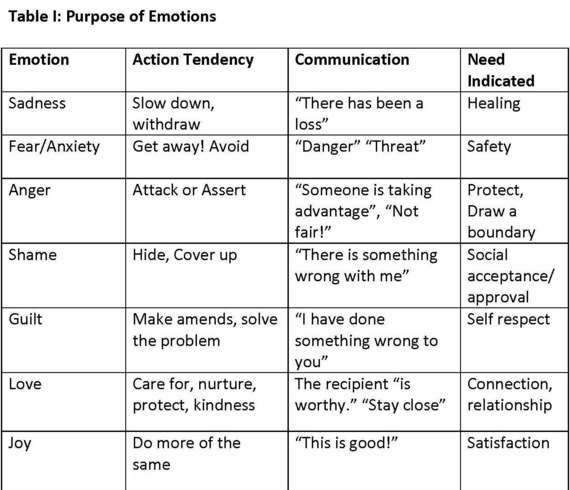

 have to do this on your own. In fact, the research is pretty clear that people tend to do best when we have meaningful, enjoyable, and/or supportive connections with others. When we are struggling seeking help from others whether it be a friend, family member, or professional (e.g., a GP, counsellor, social worker, teacher), seems to lessen the load. When we seek out opportunities to connect with other people this can help us feel less isolated and alone and can also potentially be a source of enjoyment. Psychologists interested in resilience have found that when people have a good sense of belonging and feel connected to a community, and have someone they can go to for support (family, friend, professional) they tend to cope relatively well with the inevitable difficulties in life. Researchers are also finding strong links between people’s wellbeing and the satisfaction they derive by getting involved in broader community concerns or contributing by helping others in need. I like the notion of interdependence as a way of understanding this. We are individuals, who at times like being on our own and can rely on ourselves, yet also at times need others and enjoy our connections with others.
 Strengthen existing connections and relationships. This might be as simple as arranging more regular catch ups, inviting some people you have just met to attend an event with you, chatting with your work colleagues, sending an email to someone who lives further away and haven’t seen for a while – doesn’t have to be lengthy, just short and sweet is better than not at all. Bake a cake for a neighbour just because you feel like it, offer to pick up or drop off one of your kids’ school mates- sometimes it is actions and not words.

 rock-climbing)
 psychological health. There is also some research that has linked particular nutritional supplements with improved psychological health.
 Learning ways to cope with the physiological effects of stress is a very important skill to learn and that can be one really good way of taking care of yourself psychologically. When we are faced with a perceived stressful situation our bodies respond by activating the nervous system including releasing hormones such as adrenalin and cortisol to help you react quickly and get through the situation. Typically, our breathing quickens, our heart rate speeds up and blood pressure rises, our mind becomes hyperalert, our immune system temporarily decreases- our body is geared up to act. This is also known as the fight or flight response, and is helpful when there is a threat or stressor. If the stress is ongoing and the physiological changes activated do not settle down this can lead to considerable psychological (irritability, anger, anxiety, feeling overwhelmed, depression) and physical (headaches, fatigue, sleep problems, stomach problems) health problems. Learning ways to help settle, calm or ‘deactivate’ the body from a stress response is really helpful. This is where relaxation techniques such as breathing exercises, progressive muscle relaxation, meditation, mindfulness practices and yoga can come in handy. The good news is that these are all skills that can be readily learnt and integrated quite easily into your everyday life.
 their lives and the situations they find themselves in and help them to find ways to take care of themselves whilst contending with and coping with difficult life situations and circumstances. Taking care of yourself or self-care might best be thought of as a set of strategies or practices that people can use and actions they take on a fairly regular basis to improve, maintain or enhance their general, physical, emotional and psychological wellbeing. Self-care is also an attitude toward yourself that you and your needs matter. It can help when dealing with stress and stop the cascade into burnout, with coping when struggling with anxiety and depression, and also contribute to and enhanced sense of wellbeing and life satisfaction
 What else you might like to consider when thinking about about self-care:
 Until next time, take care.

 Recognise them publicly. Give away thoughtful gifts. If possible, give them an extra day off. Plan a team outing for drinks and food
 Written by Sarah Godfrey.
  Overcoming Procrastination
 Alexandra Pope wrote, “To err is human, to forgive divine definition.” If we forgive others for their failures and mistakes we should remember to forgive ourselves. Failure and success are two sides of the same coin. We learn just as much when attempting a goal and failing as we do succeeding. Start with the radical acceptance that the goal may not be reached this time, in this way, but perseverance, adaptability and flexibility will get you success in the end.
 own time. They are not you, so stop looking over your shoulder at what everyone is doing. Don’t be swayed with what you see others are doing but concentrate on what you can do. You are a unique individual and there is no other on this planet like you, so focus on your own plan, strategy, steps and success.
 SMART your sabotage. Use the SMART goal strategy to stop one of these bad habits. Be compassionate and positive about yourself when you do this. Just as you can use this strategy to start a goal so can it be applied to getting rid of bad habits, because that in itself is a goal!